Monday, November 11, 2013
Fragrant Button Snakeroot - Eryngium aromaticum
Fragrant button snakeroot (Eryngium aromaticum) is a low-growing, somewhat sprawling perennial herb native to well-drained upland habitats throughout peninsular Florida and a few Panhandle counties, as well as parts of Georgia and Alabama. It is a rather diminutive member of this carrot family genus and for a good part of the year it takes a good eye to spot it. It can be quite common, however, in the open sunny habitats it favors.
Fragrant button snakeroot rarely stands taller than 6 inches. For much of the year, it occurs as a basal rosette of slightly spiny deeply dissected leaves. Over time, multiple rosettes form above the carrot-like tap root. The stems elongate over the spring and summer and can extend several feet in multiple directions. Flowers are produced in fall. Multiple, spiny flower heads occur at the ends of each stem. Tiny cornflower blue flowers surround the heads. They attract extremely tiny pollinating insects and eventually form brown "balls" of spiny seeds.
Though snakeroots are members of the carrot family, most are not used as larval food by the Eastern black swallowtail butterfly. Fragrant button snakeroot is one of the exceptions - making it an excellent choice for the butterfly garden.
Regrettably, this useful wildflower is not currently offered by members of FANN - the Florida Association of Native Nurseries. We have collected seed this year, however, and have hopes of offering it for sale at Hawthorn Hill in Spring 2014. It needs good drainage, full sun and a bit of space to prosper in the home landscape. Let me know if you are interested in giving it a try.
Camphorweed - Heterotheca subaxillaris
Camphorweed (Heterotheca subaxillaris) is a common roadside plant throughout Florida and much of middle and southern North America. As an annual it thrives in disturbed open habitats and can be found in a wide variety of sites.
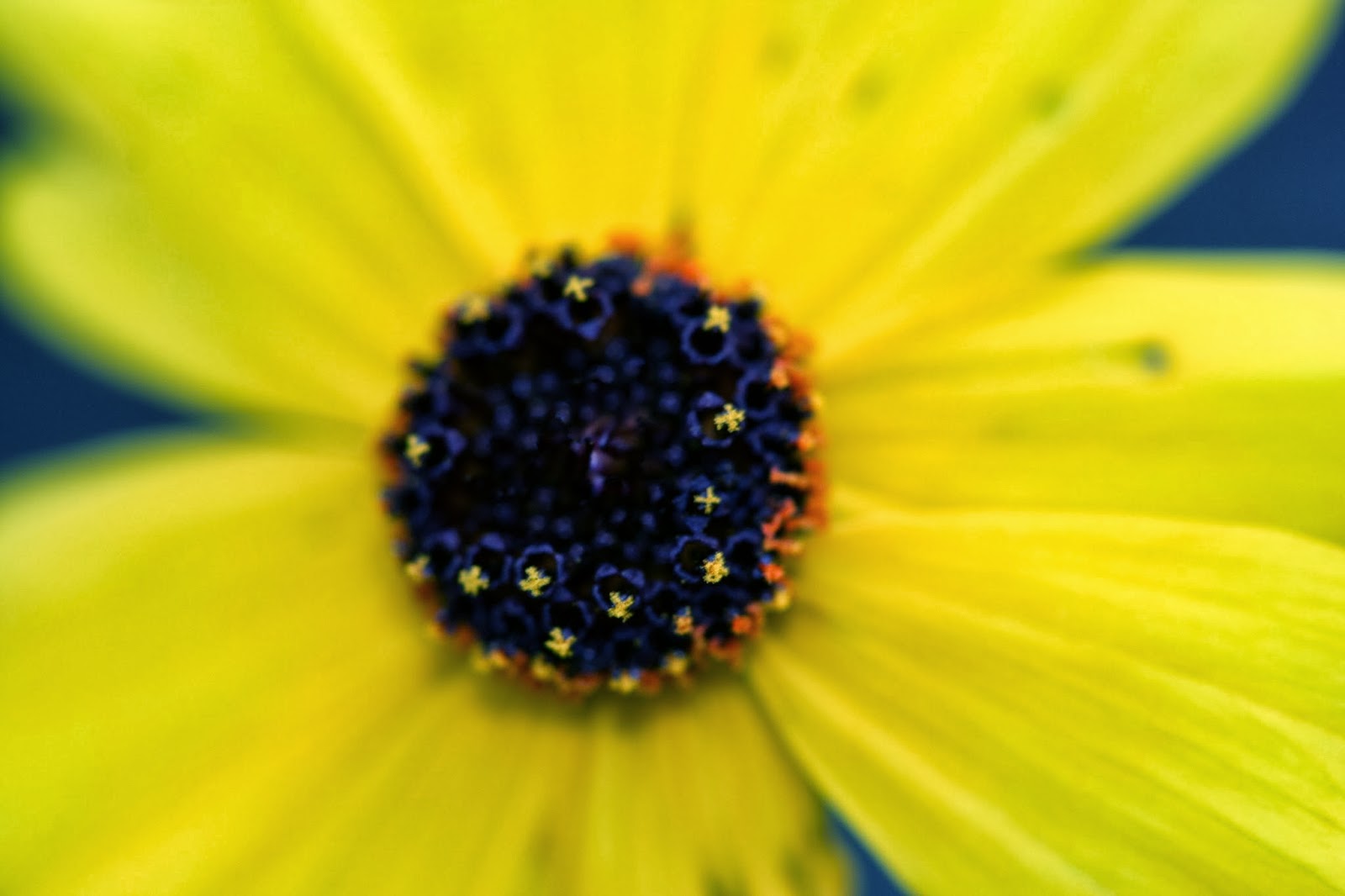
Camphorweed emerges in the spring and rather quickly forms a basal rosette of arrow-shaped leaves that are slightly rough to the touch. The foliage is also aromatic when bruised, hence its common name. Once the basal leaves are formed, it sends up a flower stalk that can reach three feet tall. Multiple heads, approximately 1/2 inch across, are produced at the tops of the stems. The heads are a rich yellow in color with a slightly deeper yellow in the center. Blooming can occur during any month, but is most common in summer and fall. As this species is an aster, the blooms attract a wide variety of pollinating insects - especially bees and butterflies.
Camphorweed is not unattractive, but a bit weedy in nature. It has value in a butterfly garden, but needs to reseed to persist. To my knowledge, it has never been offered for sale commercially by any of the nurseries affiliated with FANN - the Florida Association of Native Nurseries, but it would be easy to propagate from seed - collected when the seed heads are "fuzzy" as they are in the photos above. Sow this seed no deeper than 1/4 inch and give it a bit of time to germinate. DO not mulch it heavily if you wish to have it reseed.
Sunday, October 20, 2013
Leavenworth's Tickseed - Coreopsis leavenworthii
There are few wildflowers that say "wildflower" better than Leavenworth's tickseed (Coreopsis leavenworthii). It is found statewide in a variety of habitats, is nearly endemic (found in a few locations in Georgia), and is essentially the wildflower adopted as the official state wildflower (though the state legislature selected the overall genus and the license tag depicts the non-native, C. basalis, which is a bit showier). Often, this species is simply referred to as "coreopsis" when a discussion centers on it and it is widely propagated in the native plant industry.
Leavenworth's tickseed is most frequently encountered in moist sites, but is very adaptable and can be found in a variety of upland areas as well. Though described as a perennial, I find it to behave more as an annual. If plants survive past their first year, they are extremely short-lived perennials. They proliferate profusely, however, by producing large numbers of seed. In a natural or home landscape setting, this often results in the plant forming extensive colonies.
Leavenworth's tickseed is a thin plant with narrow leaves and a narrow crown. In my garden, it emerges in early spring and quickly grows to a mature height of 18-24 inches. Many small flowers are produced at the ends of each branch from summer into fall, though it may bloom through the year in extreme south Florida. Each flower is about one inch across; the bright yellow ray petals surround a darker disc. Like all members of the aster family, these blooms are of great interest to pollinating insects.
Because of its adaptability, its ability to persist and thrive in most landscape settings, and its cheery blooms that occur for months before declining, Leavenworth's tickseed is an extremely popular wildflower for the home landscape. Ours has persisted for more than a decade in our landscape without any supplemental care. The only thing that keeps it in check are the cottontail rabbits that love to eat it and the occasional weeding I do to keep it in bounds. This is a widely propagated species and should be easy to locate from commercial sources. Do not deadhead spent blooms for at least a month after flowering has finished if you want this plant to reseed and persist, and because the seeds are small, do not mulch it too heavily.
Florida Tickseed - Coreopsis floridana
Florida tickseed is superficially similar to many of the other yellow-flowered species in Florida, but it is much more robust than the annual C. leavenworthii and C. gladiata, and it is a fall bloomer. Florida coreopsis eventually stands about three feet tall. The bright yellow ray petals, surrounding the dark disc flowers form a bloom that is two inches across. The leaves are narrowly elliptical in shape.
Florida coreopsis is occasionally offered for sale by nurseries affiliated with FANN - the Florida Association of Native Nurseries, but it is a plant that requires wet to moist soils to survive and is not a good candidate for typical landscape settings. Its best use is at the upper edge of a wetland feature where it would get consistent moisture. In such settings, its perennial nature and its showy flowers make it a beautiful wildflower addition.
Saturday, October 19, 2013
Coastalplain Rayless Goldenrod - Bigelowia nudata subsp. australis
Coastalplain rayless goldenrod (Bigelowia nudata subsp. australis) is the Florida-specific form of a wildflower distributed along the Gulf Coast from Texas to North Carolina. The australis subspecies is found throughout the Florida peninsula, except in the very extreme southern tip. These are in the Aster family, but are not closely related to the true goldenrods - genus Solidago.
This perennial is a species of wet open habitats. It dies to the ground in winter and emerges each spring. Strap-like basal leaves, about one inch long, are soon formed, but these are easily overlooked amidst the grasses and other forbs with which it grows. It makes its full appearance in late spring to fall when the thin 1-3 foot tall flower stalks produce their numerous canary yellow blooms. As its common name implies, the flowers do not have ray petals, like many other asters. The tubular flowers are packed into flattened heads that look a bit like candelabras. Plants are often found in colonies, and these are striking during their several-week blooming season. They also attract the attention of pollinators.
Florida is home to two species of rayless goldenrod. I have posted previously on B. nutallii. The latter species is quite rare in Florida, found only in excessively well-drained sandy habitats, and has leaves that are even narrower than those shown above.
Coastalplain rayless goldenrod would make a beautiful addition to a wet prairie garden, but its need for moist to wet soils precludes its use in most home landscape settings. it is not currently offered for sale by any nursery associated with FANN - the Florida Association of Native Nurseries.
Coastal Plain Milkwort - Polygala setacea
Coastal plain milkwort (Polygala setacea) is a diminutive species that is fairly easy to overlook during its summer-fall blooming season. Native to most of Florida, and north up the Southeast Coastal Plain to North Carolina, it is resident to moist pine flatwoods, open savannas and prairies. The flowers pictured here were found at Kissimmee Prairie Preserve State Park, just north of Lake Okeechobee in mid-October.
Like most other members of this genus, it is an annual. Its slender stems reach a mature height of 6-12 inches, and rise above small basal leaves. The narrow raceme of white flowers is no more than 1/2 inch long. The flower structure is very similar to that of other milkworts; the bright yellow anthers are obvious as they extrude from the open blooms.
This is a plant that is common in the right habitat, but often goes unnoticed. The blooming season is several months earlier in more northern regions of its range. Look for it as you hike the type of moist open areas where so many other milkworts also reside.
Like most other members of this genus, it is an annual. Its slender stems reach a mature height of 6-12 inches, and rise above small basal leaves. The narrow raceme of white flowers is no more than 1/2 inch long. The flower structure is very similar to that of other milkworts; the bright yellow anthers are obvious as they extrude from the open blooms.
This is a plant that is common in the right habitat, but often goes unnoticed. The blooming season is several months earlier in more northern regions of its range. Look for it as you hike the type of moist open areas where so many other milkworts also reside.
Friday, August 23, 2013
White-flowered Pricklypoppy - Argemone albiflora
Two species of pricklypoppies are native to Florida. The yellow-flowered one, Mexican pricklypoppy (Argemone mexicana) is common throughout much of peninsular Florida. The white-flowered species (A. albiflora), described in this post is found in the same locations. It is not uncommon to find both along roadsides in full sun and sandy soils. These are members of the true poppy family.
White-flowered pricklypoppy is an annual with thistle-like foliage. The clasping, very spiny leaves are deeply lobed and the leaves are alternating along the stem. Multiple flower stalks are produced and reach a maure height of about 3-4 feet. The flowers are produced for several months from late spring through summer. They are quite showy, with broad, frilly petals and bright yellow stamens (the male parts of the flower) in the center. The pollinated flowers form spiny seed capsules that open at the top. The poppy-type seeds are then released over time as the seed capsules are shaken by wind and rain.
Although the flowers are quite attractive, the very spiny nature of this wildflower limits its attractiveness in a landscape setting. I am not aware that either species of pricklypoppy has ever been offered for sale commercially in Florida. It is extremely adaptable to open sunny locations and would be easy to grow. If you are interested, be careful to limit its spread to only those areas where its prickly nature won't be a problem.
Subscribe to:
Posts (Atom)