Saturday, June 22, 2013
Handsome Harry - Rhexia virginica
Handsome harry (Rhexia virginica) is one of ten species of meadow beauties resident to Florida. Common to moist flatwoods, and the margins of open savannas and other wetlands, it occurs across the northern tier of counties in Florida from the far west to the Jacksonville area. This is a common species to our north, and occurs in every state east of the Mississippi River as well as the line of states immediately west of it.
Meadow beauties are perennial herbaceous plants that die back to the ground each winter, and handsome harry is no exception. By late spring it reaches a mature height of several feet and initiates blooming. The stems are squarish, somewhat like a mint, but these belong to the Melastoma family. They are also covered with bristly trichomes - "hairs". The leaves of this species are opposite on the stem and somewhat variable in shape. The plants photographed above have lanceolate leaves, but sometimes they are more ovate. When they are linear, this species could be confused with the much rarer panhandle meadowbeauty (R. salicifolia). The foliage of handsome harry, however, is held horizontal to the ground and the leaves are sessile and never twisted upright as they are in panhandle meadowbeauty.
The flowers range in color from the pale form pictured above to a richer pink. Like most other members of this genus, there are four broad petals and many long curved yellow anthers. These make the plant showy when in bloom. Pollination comes mostly from bees. Like all members of the genus, the pollinated flowers form a brown urn-shaped seed capsule that persists well after the petals have fallen. These seed capsules make identifying the genus easy throughout much of the year.
Rhexias are only occasionally offered for sale commercially. They are undemanding, if their moisture requirements can be met. Though somewhat forgiving of short droughty periods, it perfers extended periods during the growing season of ample moisture. Handsome harry performs best in north Florida and other similar species should be tried further south here if you wish to add it to your landscape.
Sunday, June 9, 2013
Open House at Hawthorn Hill - July 13, 2013
It's time to reduce our inventory and make space for the new seedlings I have coming up in flats.......... Nearly everything I have will be on sale, 1 day only - Saturday July 13. Check out our landscape too! Alexa and I would love to show you what we're up to. If you want to stop by, let us know and I'll send directions to our home in Seminole, Pinellas County:Huegelc55@aol.com. I also will send a copy of my current availability list if you email me.
We have plenty of butterfly plants - both larval and nectar species
Silene regia - Royal catchfly - just a few left
We have plenty of butterfly plants - both larval and nectar species
Sunday, June 2, 2013
Queen's Delight - Stillingia sylvatica
Queen's delight (Stillingia sylvatica) is a common member of the euphorbia family, found statewide in Florida in upland sites such as sandhills, old fields and open woodlands. It is found throughout the Southeastern Coastal Plain as well - from Texas north to Colorado and east to Virginia. Throughout this range, it is often a common understory wildflower.Queen's delight is a perennial, but generally loses its basal leaves in winter. It re-emerges each spring and forms a rosette of leaves that can reach 12-18 inches across, though younger plants are not nearly as broad. The leaves are elliptical, shiny, and a rich green in color. Older plants can produce multiple stems, but younger ones have a single stem. Photos of both are shown above.
Flowering occurs in late spring and early summer. As this is a euphorbia, the male and female flowers are produced on different parts of the stem. The open male flowers lack petals and are formed on the top. The pollinated female flowers that are now ripening seed capsules are below in the above photographs. Producing male and female flowers that open at different times ensures that another plant will pollinate it.
Queen delight's odd common name is often ascribed to it's value in herbal medicine. One story tells that it was used to treat syphilis and that its value in doing so delighted the Queen as this disease was ravaging the Old World at this time. Tinctures from the roots of Queen's delight have also been used as a blood purifier, digestive aid, and immune enhancer. The Creek nation is also said to have made extensive use of this herb for medicinal purposes.
Queen's delight is an interesting, but not exceptionally beautiful wildflower that has not been offered commercially by members of FANN - the Florida Association of Native Nurseries. It has only margnal value to nectaring wildlife, but the foliage is sometimes eaten by browsing animals such as rabbits and white-tailed deer. It would be relatively easy to propagate from seed if you wanted to try it. Wait for the capsules to turn dark, collect a few, and store them in a brown paper bag or other such container where they can dry. They will split when black and fully ripe, releasing the small seeds. Sow them just below the soil surface.
Friday, May 31, 2013
Roadside (Annual) Phlox - Phlox drummondii
Roadside phlox is an annual that is not native to Florida, but widely planted on roadsides throughout the northern half of the state. It actually is native to Texas, but it thrives in well-drained sunny areas and, thus, makes an excellent roadside wildflower. It is a difficult landscape addition, however, because it is an annual and, like all members of this genus, its seeds "explode" when the seed capsules ripen and next year's phlox plants end up everywhere in the landscape except where they started.
Roadside phlox germinates in early spring and reaches its mature height of about 12 inches by late spring. Individual plants are thin and rather weak-stemmed. Leaves are linear and yellow-green in color. This is not a showy species for its foliage or when planted alone. In mass, however, it is spectacular.
Flowers come in a wide range of colors - from white to deep crimson, but most are a shade of pink, often with a contrasting center. All phlox are good nectar sources for butterflies and this species is no exception. Flowering occurs over a period of about a month, the plants soon wither and die by fall.
Florida's native phlox are perennials and these make superior landscape plants. Roadside phlox, however, is a superior choice for roadsides as it rapidly colonizes open areas and thrives in the sunny, often-dry conditions found on most roadways. Because of this, it is widely seeded by state highway staff involved with Florida's roadside beautification projects. It can't be missed if you travel anywhere in north Florida during April-June.
If you wish to try it in a landscape, use it in large planting beds where it can move about over the years, give it open, sunny conditions, and do not mulch it. I have had very limited success with it as a mixed wildlower garden specimen as it truly looks best when it can be massed and its annual nature and its method of reseeding make it impossible to mass over time unless it is used in a setting much like those found along roadsides.
Goldenmane Coreopsis - Coreopsis basalis
Goldenmane coreopsis (Coreopsis basalis) is the wildflower featured on the state wildflower license plate, but it is not native to Florida. The state's legislators adopted the genus, Coreopsis, as the state wildflower, not this individual species, and someone apparently decided that this species was the showiest of the group... It's hard to take exception to that as the rich yellow ray petals are beautifully contrasted near the center disk flowers by a deep maroon "V"-shaped pattern.
Goldenmane coreopsis is actually a western wildflower that occurs naturally in plains, pastures and prairies as well as in disturbed areas throughout the Deep South from Texas to the Carolinas. It is widely planted for the color it lends mixed wildflower plantings. In Florida, it is frequently mixed with other wildflower seed and used for highway beautification projects in north Florida. The photos above were taken in mid-May in Citrus County.
Goldenmane coreopsis is an annual and persists in open habitats and in places that undergo slight disturbance, allowing its seed to make good soil contact and germinate. Growth is rapid from early spring and flowering occurs by late spring. Flowers are produced into mid-summer and the plants wither by early fall.
This is a rather short, broad-spreading species. Most plants reach a mature height of about 12-18 inches, though the flower stalks may stand a foot taller. The plants are 12 inches across and the many basal leaves are deeply dissected.
Goldenmane coreopsis prefers sunny well-drained sites. It fails rapidly if the soil remains wet for long. I have not had much success with this species at my home in Pinellas County, and suspect it is best used only in the northern 1/3 of the state.
There is some dispute among taxonomists regarding its nativity. The vast majority do not consider it native, but a few argue that it should be considered native in the far western counties of the Panhandle. Regardless, it is widely planted on roadsides and, thus, widely encountered. The seed is also available should you decide to add it to your landscape. Just make sure you give it conditions that will allow it to reseed.
Monday, April 29, 2013
Swamp Twinflower - Dyschoriste humistrata
Swamp twinflower (Dyschoriste humistrata) is a wetland relative of the nearly ubiquitous upland twinflower (D. oblongifolia). Unlike its close cousin, swamp twinflower is confined to the peninsula, from the Georgia border to DeSoto County in the south-central region. Here, it occurs mostly in the partially shaded edges of forested wetlands. This twinflower has also been reported in Georgia and South Carolina.
Swamp twinflower is a deciduous perennial. It emerges in early spring and produces a large number of weak decumbent stems. Each reaches a length of several feet and and they root in various places as they touch moist soil. The deep green almost-succulent leaves are opposite each other on the stem, somewhat ovoid in shape, and about 1/2 inch long. The foliage is attractive and the plant's habit makes it an interesting ground cover for somewhat shady and moist locations.
Flowering can occur in most months, but is most common from late spring to early summer. The flowers are a pale lavender with a deeper lavender throat. They are less showy than those of its more common cousin and smaller; typically half the length of D. oblongifolia.
Swamp twinflower has never been offered, to my knowledge, by anyone associated with FANN - the Florida Association of Native Nurseries, though it has potential as a flowering ground cover if planted in the right location. Use it in partly sunny to mostly shady locations where the soil maintains some moisture. I am told that it has good tolerance for occasional drought, but it won't persist if not kept frequently moist. We are currently experimenting with swamp twinflower at Hawthorn Hill. As we learn more about its adaptability, we will keep you posted.
Sunday, April 7, 2013
Golden Alexander - Zizia aurea
Golden alexander (Zizia aurea) is a short-lived perennial member of the carrot family. In Florida, it is confined to various northern counties, south to Levy County. It is widespread elsewhere, however, and occurs in every state and province along the Eastern Seaboard north to Quebec. Its range extends west to Manitoba and then south to Texas. In all of this region, it prefers moist to average sites in partial to dappled sun.
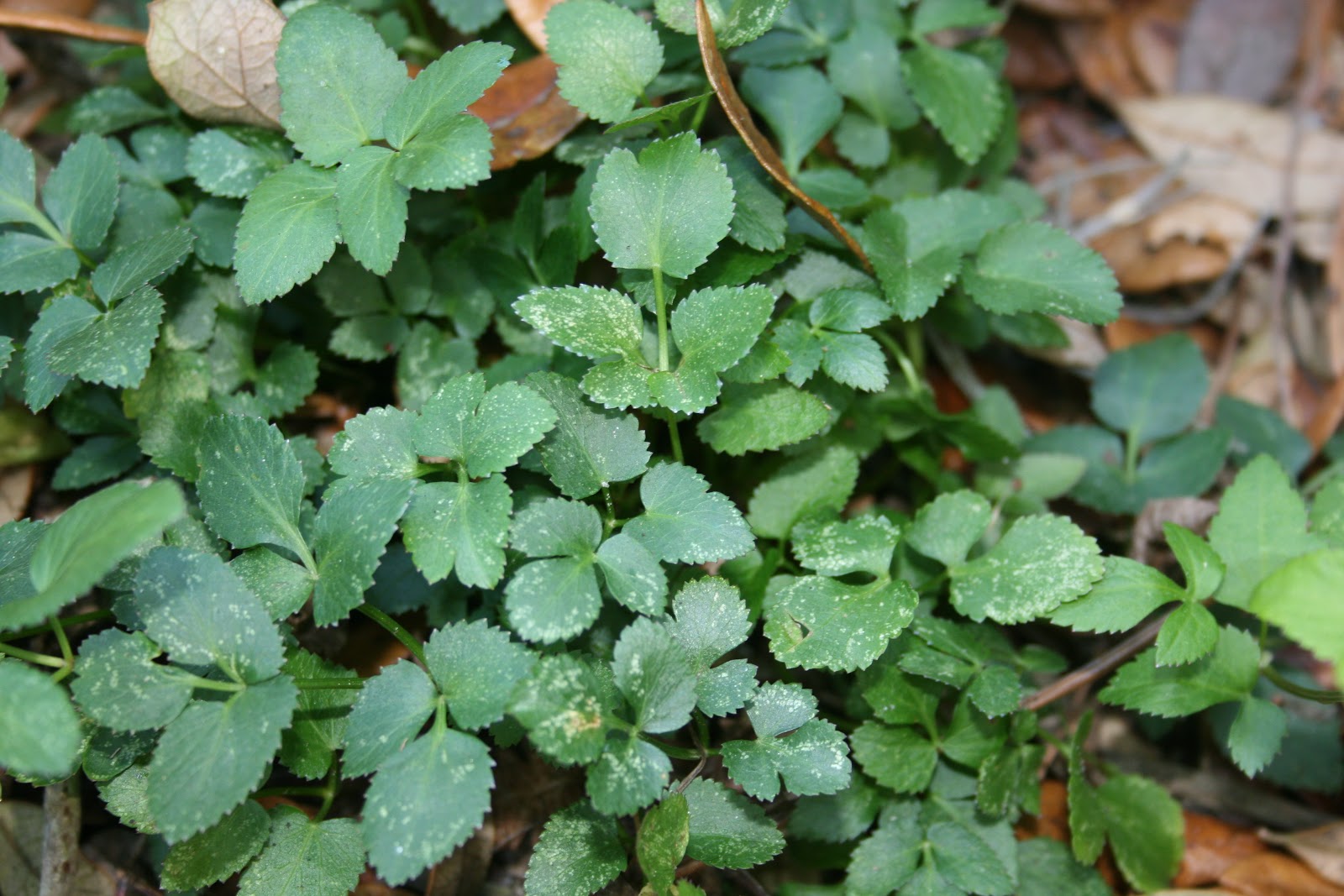
Golden alexander has deeply dissected foliage - like so many other members of the carrot family. The basal leaves are divided twice into three leaflets while the upper leaves are single. These leaves are maintained in warmer climates, but are deciduous where temperatures drop to below freezing. They are maintained as a mound and this is quite attractive. As a "carrot" they are also attractive to the caterpillars of the eastern black swallowtail butterfly.
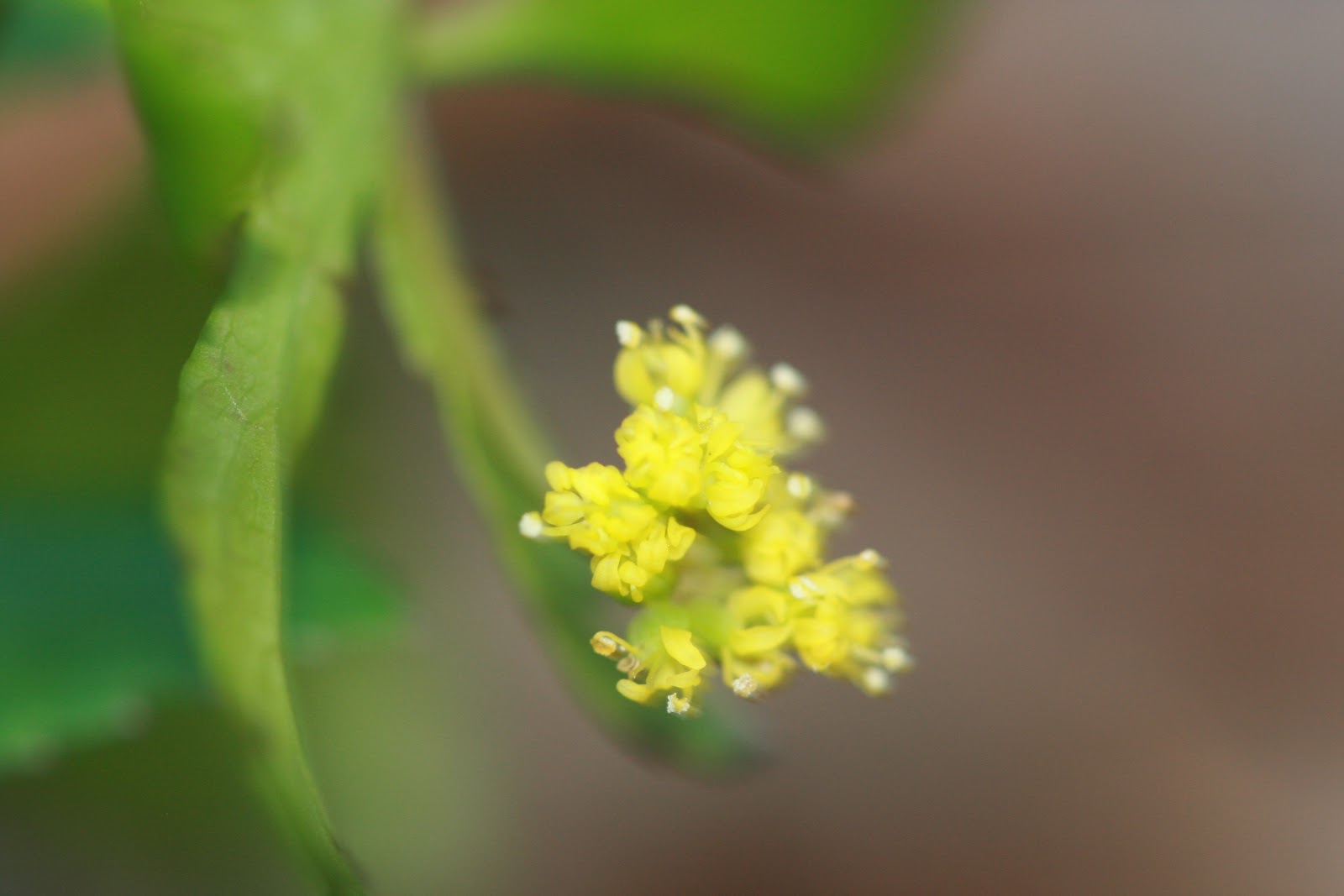
Flowering occurs in the spring. Like other members of this family, they are borne in flat clusters, called umbels, at the top of each stem. Each flower is tiny and bright yellow. Normally, the flower stalks stand 1-2 feet above the basal leaves, but in the plants featured above, they are much shorter. They are pollinated by tiny bees and flies. The ripened seeds in summer are purplish.
Golden alexander would seem to be an ideal landscape plant for Florida butterfly gardeners interested in feeding eastern black swallowtails as it does not require wet soils like so many other of its larval plants do. It is rarely propagated in Florida, however. I purchased my plants from Dan Miller of Trillium Gardens, Tallahassee and as far as I know, he is the only nursery in the state to offer it. We have had our plants for about a year and I am not yet prepared to recommend it too far south of its native range. I suspect it is adaptable to at least central Florida from what we have experienced so far. I would welcome your comments if you have tried it in your landscape.
Subscribe to:
Posts (Atom)